March 2026
Dear Future Northbrook Village Trustee:
It has been a while since I last posted here. After a historically close — and historically nasty — election and a disappointing aftermath, it seemed appropriate to step back, watch how the new Board performed, and root for its success as it worked to deliver on its campaign promises.
The 2026 State of the Village provided a natural checkpoint — a chance to take stock of where things stand, what progress has been made, and where we still seem stuck. During the Q&A, the Village President encouraged residents to move beyond commentary and step forward to participate in governance. I agree with that principle.
I started Engage Northbrook not because I had all — or frankly, any — of the answers, but because I was genuinely curious to learn more about the issues facing Northbrook. I have long believed that one of the best ways to truly learn something is to write about it, share it with others, and let their feedback sharpen my thinking. If, along the way, even one person learns more about our hometown and feels inspired to get more involved, all the better.
Writing Engage Northbrook is not governance itself, but it is one meaningful way to participate in civic life and help others do the same. Formal participation in Village government, of course, is not as simple as just deciding to do it. There must be openings on committees, where appointments are ultimately made by the Village President, or openings on the Board, where the voters usually decide.
Currently, there are no committee openings — but there is an opening on the Board.
As announced at the February 24 Village Board meeting, Michelle Kohler — a trustee since 2022 — resigned for personal reasons, and her seat is now open. Under Illinois law, the Village President is authorized, with the advice and consent of the Board, to appoint a replacement to serve until the April 2027 election, when voters would choose who serves the balance of the term through April 2029.
We should all thank Trustee Kohler for her service. Local office is demanding. It requires time, resilience, and a willingness to absorb criticism, often undeserved. Whatever one’s views on any particular issue, the decision to step forward and serve the community deserves our gratitude.
Northbrook faced a similar situation in late 2023, when a trustee stepped down and a replacement was appointed. At the time, the Village President openly acknowledged the tension in an appointment process that bypasses direct voter input and emphasized that the eventual appointee had already come through familiar Northbrook civic and political channels.
Parsing her remarks, I would expect this appointment to be based primarily on what the Village President regards as publicly defensible. In practice, that likely points to someone who has already come through Northbrook’s familiar civic or political pathways — whether through the Caucus, service on a Village commission, or both.
What should happen instead is that the aperture is opened much wider. This is effectively a one-year appointment. The appointee would face election in April 2027 and, if elected, again in April 2029. That alone should make the Board more willing to consider candidates who have not already come through the Village’s usual civic and political channels.
As we look ahead to April 2027 — when four seats, a majority of the Board, will be on the ballot — this appointment should be treated as more than a one-off fill. The Board may be entering a broader period of transition, with two highly regarded and long-tenured trustees reaching the end of their terms next year and potentially choosing not to run again. This is a crucible moment for Northbrook, and it’s on all of us to ensure that the full depth of talent in this community is engaged.
But building that bench requires acknowledging a hard truth: some capable residents may feel disenfranchised or disincentivized from stepping forward. The vitriol in the 2025 election was unbecoming of any town and discouraging to many. The way the Village handled the Economic Strategy Commission may have sown doubt for others. If the Board wants a real bench, it may need to do more outreach, mend fences where it can, and demonstrate a willingness to approach engagement and governance differently.
Whether the Board does that or not — and even if, as some assume, the next trustee has already been unofficially selected — I still hope we see a large number of qualified residents step forward to apply. A strong applicant pool forces transparency, signals that serious people are paying attention, and creates a bench the Village can draw from for future commissions, task forces, advisory roles, and, ultimately, the ballot.
Full engagement across Northbrook is essential, because we face significant issues — none of them new, and many of them intertwined.
I believe there are three that our next trustee should champion:
- Affordable Housing and Economic Revitalization
- Public Safety Facilities
- Community Engagement
Affordable Housing and Economic Revitalization
Northbrook’s affordable housing policy and its economic revitalization goals should not be treated as separate conversations. They are tightly connected, and right now the Village appears to be falling short on both.
For more than two decades, the Village Board has made affordable housing a stated priority, yet Northbrook still sits well below the 10% benchmark and appears to have made only limited progress. The current approach relies primarily on requiring 15% of units in new residential developments to be designated as affordable. The Village has clearly invested itself in that model. As the Village President and the Caucus argued during the 2025 election, it is well intentioned, externally validated, and even “award-winning.”
But the real question is simpler: is it working? After all these years, the answer appears to be no. Whatever the ordinance may look like in theory, the only award that matters is actual progress against the problem. If Northbrook’s affordable housing stock remains relatively flat and still nowhere near the stated goal, then the Board should do what any responsible leadership team would do: examine why the current approach is not delivering and make the necessary adjustments. Otherwise, this becomes a plan in name only — one that satisfies a state mandate without producing meaningful results.
At the same time, the current approach may also be contributing to another problem the Village says it wants to solve: economic revitalization. The concern is straightforward. If the 15% affordability requirement makes projects harder to finance, harder to justify, or harder to close, then it may be suppressing the very development Northbrook needs. In theory, that requirement can be absorbed through reduced margins, internal cross-subsidization, or higher prices on market-rate units. In practice, it also introduces a simple reality: some projects will still pencil, and some will not. When they do not, developers can choose to build elsewhere.
Or the numbers can be made to work in another way: the land trades at a lower price. Our Lady of the Brook property is one example that has been discussed locally, including reports that St. Norbert’s sold it for $7 million last year, $1 million below what some expected. Ironically, it may also help explain, at least in part, why the Village has yet to find a buyer for the Grainger site, which it purchased nearly eight years ago for $8 million — the Village may be holding out for a price the current affordable housing framework does not support.
It’s worth stating plainly: I am not arguing this because I want developers to make more money; I am arguing it because I want affordable housing to actually exist. Right now, we are holding the moral high ground surrounded by empty lots. Fifteen percent of a project that never breaks ground is zero affordable units. If we care about results, we have to acknowledge the math: if the numbers don’t work, the housing doesn’t happen. We need keys in hands — not just awards on a shelf.
That also matters because economic revitalization requires more consumers. Events, signage, parking improvements, and other placemaking efforts may all help at the margins, but they do not create the kind of steady, daily demand that restaurants, retailers, and service businesses need in order to thrive. More residents do. More housing supply does. More density in the right places does. If Northbrook’s affordable housing policy is discouraging residential development, then it is not only failing to produce the housing results the Village wants — it may also be undermining the economic revitalization the Village says it wants.
That is especially relevant at Northbrook Court and in downtown Northbrook. If the Village wants a more vibrant downtown and a viable future for major redevelopment sites, it is hard to see a path that does not include more residential development in and around those areas. More residents mean more customers within walking distance, more daily activity, and a stronger foundation for private investment. Density is not simply an aesthetic question. It is an economic one. It is also worth noting that the Village already revised its Northbrook Court phasing requirements in 2025 after Brookfield argued that the original 2023 “retail-first” sequencing was not feasible — implying that meaningful residential density is a prerequisite to making the retail economics work. A year later, there is still no visible movement, which suggests that something beyond sequencing is now preventing the project from moving forward.
This does not mean affordable housing should become less important. Quite the opposite. Northbrook should pursue it because it is the right thing to do. But if the Village is serious, it needs a policy that can do two things at once: produce better affordable housing results and support the kind of development that strengthens the broader community. The goal should not be affordable housing or economic revitalization. It should be both.
To get there, the Board needs to drive a more honest public debate around two questions. First, why are builders not building here? Second, what is Northbrook’s actual philosophy on density? Until those questions are addressed directly, the Village risks staying on the same slow road to nowhere — falling short on affordable housing while also making economic revitalization harder than it needs to be.
Although a new trustee would not have the power to change this singlehandedly, he or she can force that debate into the open as we head toward the 2027 election, when four seats — a majority of the Board — will be on the ballot.
Public Safety Facilities
While there may be room for disagreement around housing affordability and economic development in Northbrook, there is little debate that we are woefully behind on our public safety infrastructure. We are where we are because prior Boards repeatedly kicked the can down the road, but the Village President has painted an urgent and dire picture of these facilities for years — to the point where residents should be genuinely concerned about the impact on Village employees.
A year ago, I was encouraged by what looked like meaningful progress on these long-overdue public safety needs. A year later, however, the picture is mixed. Some pieces appear to be moving, others seem to be slipping, and the most consequential long-term questions remain unresolved. Yes, there has been some progress — but progress that remains uneven in the face of urgent needs is still cause for concern. What we need now is sustained, transparent reporting on our progress that matches the urgency Village leadership itself has described for years.
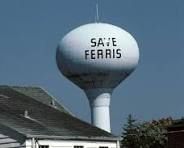
The good news is that the Fleet Garage — currently located next to the Save Ferris water tower near downtown — appears to be on a path toward resolution. In August 2024, the Village Board approved the $2.3 million purchase of 3504 Commercial Drive, a 30,000-square-foot facility in the Sky Harbor area. The original plan called for construction to begin no later than October 2025 and for the facility to open in summer 2026. Although the Village President did not provide a target relocation date in the recent State of the Village address, the Village provided an update this week indicating that construction started in January and is anticipated to complete by the end of 2026.
The picture for Fire Station 11 is less encouraging. The Village approved the $998,000 purchase of a two-acre parcel at 820 Dundee Road to serve as the future site, with construction originally expected to begin in August 2025 and wrap by summer 2026. At the 2026 State of the Village, however, the Village President indicated that “we’re in the process now of constructing a new fire department to open at the end of this year.” If that is now the timeline, the project appears to be behind its original target. And if you drive by the site, it is plain that construction has yet to commence.
Worse, the new station does not fully replace all of the functions currently housed at Station 11. The Village has yet to identify a new home for the Emergency Operations Center or for Fire Headquarters more broadly. On that front, the Village President said only that she had “confidence” that the Village would have answers “in calendar year 2026” about where those facilities would go.
As concerning as these updates are, the situation with the Police Station remains the most unresolved. A prior space study recommended a 5.6-acre site for a new police station. A 2023 analysis then concluded that rebuilding on the current site would likely be cost-prohibitive. Despite both of those conclusions, the Village purchased the property adjacent to the existing station in January 2025, expanding the site to only 4.5 acres. At the time, the Village said it would evaluate whether that expanded footprint was viable or whether another site would still be needed. A year later, the only real guidance offered at the 2026 State of the Village was that a site for the new Police Station, like the Fire Headquarters, would be addressed “in calendar year 2026.”
I have no doubt that these are difficult issues with no obvious answers. But we have heard repeatedly how urgent and overdue these needs are, and yet here we are in 2026 with the pace of progress and clarity of the path forward that do not appear to match the urgency of the situation.
The next trustee should come aboard with fresh eyes and insist on a full public post-mortem of where things stand, why they stand there, and what range of options actually exists. Even if the Village is facing a menu of imperfect or unacceptable choices, residents should understand that clearly — and so should the employees whose working conditions have borne the cost of delay.
Community Engagement
For years, we’ve been told that improving communication with Northbrook residents is a priority, and the Village has floated or launched a variety of new channels and initiatives in response. It is worth remembering that the trustee appointed in 2023 was selected in part because of her background in marketing, communications, and public relations. Yet here we are in 2026, with a significant portion of the State of the Village still devoted to communication and engagement — a sign that, despite all the talk, this remains an unresolved issue.
That may help explain why the Village launched a strategic planning process in 2025 that was described as an opportunity to “engage the public in the long-term strategic direction of Village services and initiatives” and to collaborate with stakeholders to establish consensus around the Village’s vision. The goal sounds admirable enough. But with so many visible and pressing priorities already on the table, it is fair to ask what exactly the Board hopes to learn from another structured input exercise that it does not already know.
The issue is not whether surveys, forums, interviews, or idea walls have any value. They do. The issue is whether the Board has started to mistake those tools for genuine engagement.
For example, consider the Grainger property. It is concerning that we still have not heard anything about the RFP responses, which were due four months ago. Multiple responses were submitted, yet there has been no communication with the community about what was proposed or how the Board is evaluating those proposals — despite the controversy this property has generated during the nearly eight years the Village has owned it.
That silence is not just a communications miss. It is a missed opportunity for meaningful engagement. If the Village is serious about transparency and trust, Grainger is exactly the kind of issue where residents deserve timely, substantive updates.
It is also a reminder of basic human nature. When there is a vacuum of information, people fill it — often with assumptions and narratives that are harder to unwind later. That risk is amplified here because in March 2021 the Village President described the Grainger purchase as an “outstanding opportunity” that would help the Village “control the downtown,” noted that developers were already calling, and expressed confidence the Village would make money on the property.
Nearly five years after those remarks, the Village still owns most of the site, and this year’s State of the Village did not include a single reference to it in the prepared remarks. Silence may feel safer in the moment, but over time it erodes trust — especially on an issue this visible.
Here’s a simpler idea to increase community engagement: direct, recurring conversation with residents. What I would like to see instead is for the next trustee to engage residents directly and consistently, in public. One practical way to do that would be to hold one small roundtable each month — perhaps eight residents at a time — and then post a candid public summary of what was heard. Not sanitized themes. Not consultant language. Not a polished communications product. Just a clear and faithful account of where residents are aligned, where they are frustrated, and where they believe the Village is falling short. If one trustee did this seriously and consistently, it would not only make that trustee better informed; it would set an example the current Board would be wise to follow.
This is also one reason I believe the next trustee should have experience leading a large, complex organization. Anyone who has done that knows that dashboards, surveys, and official updates rarely tell the whole story. The real work is in talking to people directly, figuring out where the friction really is, and hearing bad news early enough to do something about it. That mindset is exactly what Northbrook needs more of on the Board.
If the Village is serious about improving trust, it should stop treating communication primarily as a matter of sanitized meeting summaries, tools, plans, and managed engagement exercises. It should treat it as a discipline of direct contact, real listening, and public accountability. That is the standard I hope the next trustee embraces — and, ideally, helps the rest of the Board embrace as well.
Conclusion
In conclusion, my hope is that the next trustee uses this 12-month appointment to bring greater transparency and more honest public debate to affordable housing, economic revitalization, public safety facilities, and community engagement. I am under no illusion that a single trustee can solve complex infrastructure delays or fix our housing strategy in a 12-month appointment. That is not the job description I am proposing.
Rather, the value of this interim appointee is their ability to ask fresh questions without the burden of past decisions. We need someone to look at these stalled projects with new eyes and help the community understand exactly where the roadblocks are. They don't need to finish the Police Station by next April; they just need to help surface the realistic options and trade-offs in front of us. If they can help bring that level of clarity to the public conversation, they will have provided a vital service to Northbrook as we head toward the next election. A year from now, four seats — a majority of the Board — will be on the ballot. These are the issues I believe the next trustee should force into the open before that election arrives.